


The question that changed the room
It started, as many useful insights do, with a question that seemed almost too simple. “What puts you into a threat state?” The question was asked through a live session I was running, REWIRE Your Words: Change Your Outcomes, a focused exploration of how language shapes thinking, communication and performance. This is where many leaders struggle to improve communication under pressure, even when they have the capability.
Within seconds, the chat filled. Not slowly or cautiously, yet quickly and with a sense of familiarity; Competing priorities. Unrealistic expectations. Sudden change. Micromanagement. Email overload. Fear of failure.
Different industries. Different roles. Same experience. What stood out even more was what no one said. No one mentioned lack of capability. No one questioned their intelligence. No one suggested they were not good enough. That moment revealed something important. The challenge is not capability. It is what happens to the brain under pressure.
The brain is always scanning
One of the key ideas explored in the session is simple, yet powerful. Your brain is constantly scanning your environment. Not occasionally. Not consciously. Constantly.
It is asking, am I safe, or is this a threat? This is not a fixed state where you are either in threat or reward. It is a continuous process. A subtle shift in language, clarity or expectation can move you one way or the other.
When the brain leans toward threat, it prioritises protection. When it leans toward reward, it enables performance. That shift influences everything that follows.
What happens when the brain moves into threat
When the brain detects uncertainty, overload or lack of control, it reduces access to the thinking part of the brain. Clarity drops. Decision-making becomes reactive. Communication changes.
Participants described this clearly during the session. The triggers were everyday experiences.
🔷 Competing priorities and constant change
🔷 Lack of clarity or structure
🔷 Pressure without direction
🔷 Fear of being made redundant.
These signals are enough to shift the brain toward threat. And when that happens, people do not communicate at their best. Not because they do not know how. Because their brain is not in the right state to do it well.
Why Communication Under Pressure Breaks Down
Most leaders focus on communication as a delivery skill. What to say. How to say it. When to say it. Yet the breakdown often happens earlier. This is especially true when communication under pressure becomes reactive rather than intentional.
Leaders are moving quickly from one demand to the next, with little time to think. Conversations are layered on top of constant activity. There is no pause to define the purpose of the conversation, the outcome that matters or how the message needs to land. So the conversation happens without clarity. The result is predictable.
🔷 Messages land differently than intended
🔷 Conversations circle rather than resolve
🔷 Alignment takes longer than it needs to.
The quiet language that increases pressure
As the session deepened, participants began to notice something more subtle. Their internal dialogue. Under pressure, many described the same pattern. “I should be handling this better.” “I should have this sorted.” The word should appears responsible. It feels like discipline. Neurologically, it triggers pressure and guilt, signalling something is wrong or not aligned.
The brain reads that as threat. Once threat is present, the quality of thinking drops. Confidence tightens. Clarity fades. Second-guessing increases.
This is not mindset. It is how the brain responds to language. This is neuroscience communication in action, where words directly influence how the brain processes threat and reward.
A shift from identity to awareness
One of the most powerful shifts in the session came when participants changed how they described themselves. Instead of saying “this is who I am,” they began to say “this is what my brain is doing.”
That shift changed everything. It removed judgement. It created awareness. It restored choice. Participants began noticing when they were in a threat response, when fear or uncertainty was driving behaviour and when they were slowing down or withdrawing. These were no longer personal flaws. They were brain responses. And once you see that, you can change how you respond.
Language as a tool for control and clarity
With awareness came experimentation. Participants started using language differently, not to sound better, yet to think better.
Two phrases stood out. “I choose…” and “I am…” “I choose” introduces control, even in uncertain situations. “I am” creates stability and direction. These are not motivational statements. They are tools that help the brain settle and refocus. From there, communication becomes clearer. Not forced. Not rehearsed, more intentional.
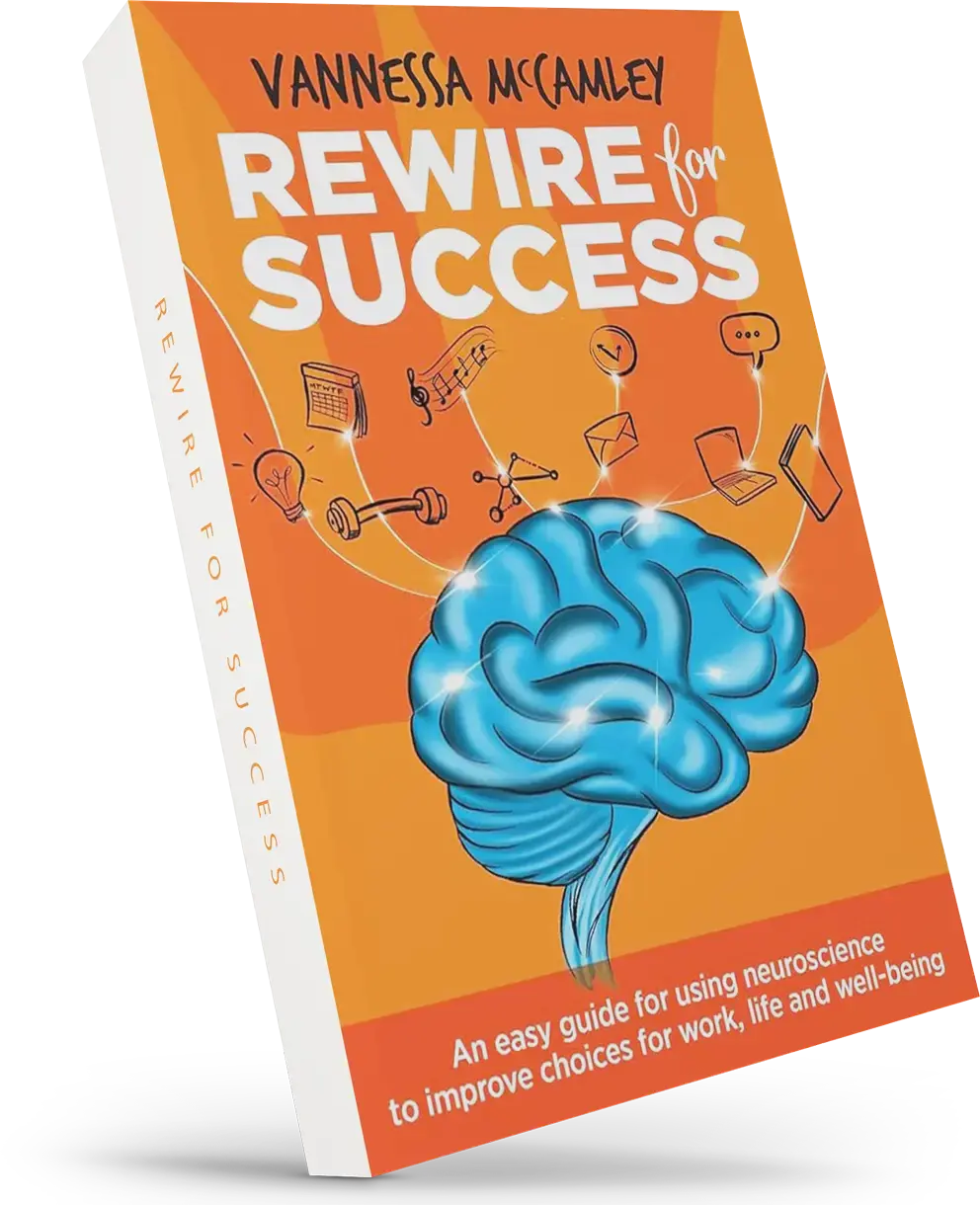
Make Better Decisions - Even Under Pressure
Get the first two chapters of Rewire for Success – a neuroscience-based guide to clearer thinking, better decisions, and sustainable performance.
Make Better Decisions - Even Under Pressure
Get the first two chapters of Rewire for Success – a neuroscience-based guide to clearer thinking, better decisions, and sustainable performance.
Why clarity outperforms pressure
As the conversation moved to leadership, a clear pattern emerged. Many behaviours that trigger stress are unintentional. Urgent requests. Vague expectations. Constant changes. These are meant to drive performance.
Yet they often create the opposite. When urgency appears without clarity, the brain reads danger. When expectations are unclear, people hesitate. This is where clarity becomes powerful.
Consider the difference.
“This is urgent.”
“This is what matters most right now, here’s why it matters and what success looks and feels like.”
Both aim to move things forward. Only one creates clarity, focus and connection to the purpose.
🔷 Pressure creates noise
🔷 Clarity creates direction.
Direction drives performance.
What actually improves performance
Participants were asked when they felt at their best. The answers were not complex. They described seeing progress, knowing what is coming next, receiving timely feedback and supporting others.
🔷 Progress
🔷 Clarity
🔷 Feedback
🔷 Connection.
These create a reward response in the brain. Momentum. When people feel progress, they think more clearly, communicate more effectively and contribute more fully. This is where performance improves.
The 1% shift that changes everything
The session closed with a simple practice. Before your next conversation, pause and ask yourself three questions.
🔷 What is my purpose?
🔷 What outcome do I want and why does it matter?
🔷 How do I want others to think, feel and do from this?
This creates space. It shifts you out of autopilot. It brings intention back into how you communicate. And that changes how your message is received.
The insight that stayed with everyone
Across all responses, one theme stood out. People want to feel clear, capable and in control of how they respond, even when they cannot control what is happening. This is the foundation of effective leadership.
Change your words. Rewire your thinking.
You do not need more information. You need more clarity in how you think and communicate. Start small.
🔷 Notice your language under pressure
🔷 Create space before responding, take a deep breath
🔷 Lead conversations with intention.
Even a 1% shift, applied consistently, creates meaningful change.
Change your words.
Rewire your thinking.
Change your outcomes.